Vision-language models (VLMs) and text-prompted vision foundation models (VFMs) can look suspiciously alike: both accept an image plus text, both use Transformers, and both return text. That description is accurate in the same way that “a database and a spreadsheet both contain rows” is accurate—technically true, operationally unhelpful.
To make the difference concrete, I compared Microsoft’s Phi-3.5 Vision with Florence-2.
The practical answer #
Use Phi-3.5 Vision for broad business scenarios and tasks that produce longer natural-language answers: document understanding, multi-image comparison, chart reasoning, and summaries.
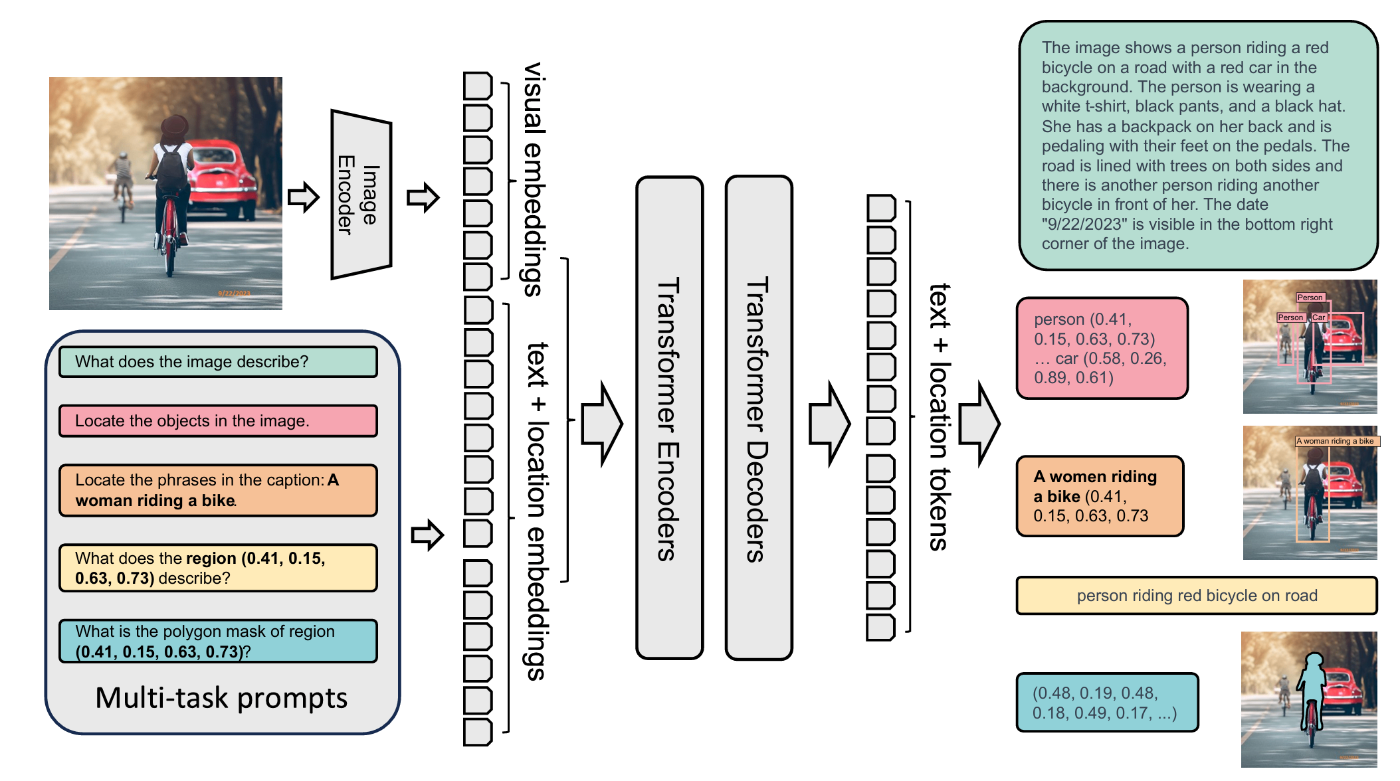
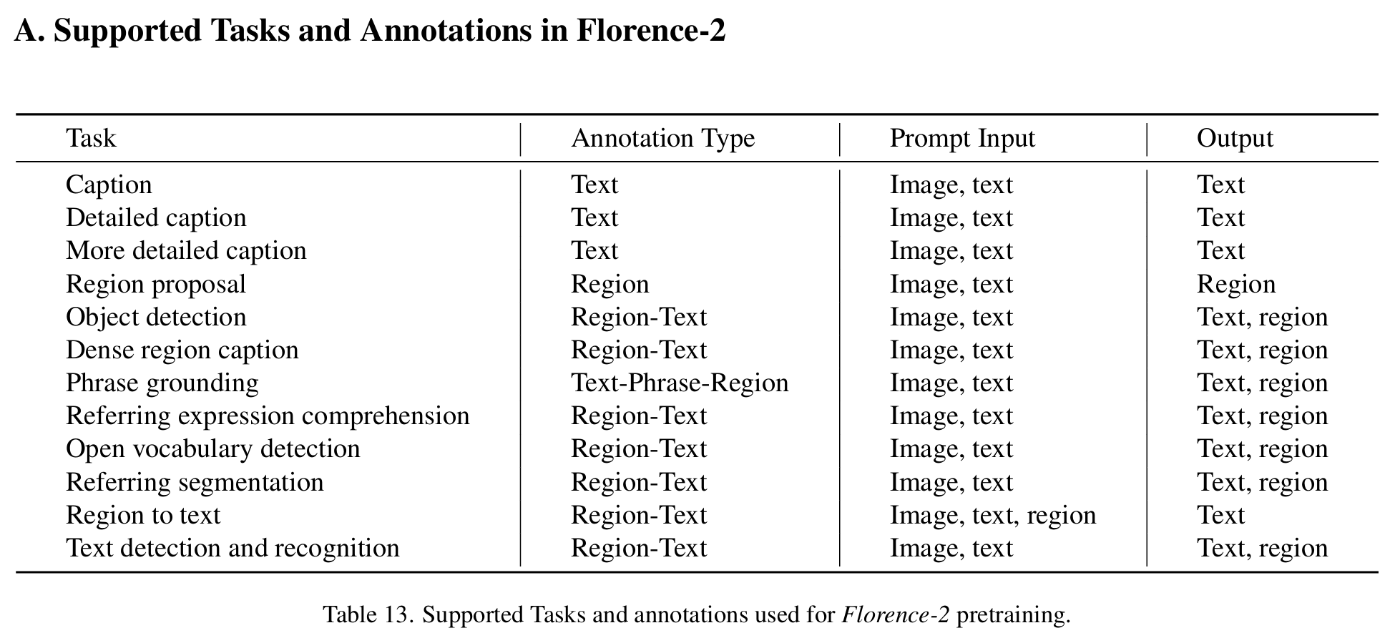
Use Florence-2 for image-, region-, or pixel-level work: captioning, object detection, region proposals, and segmentation. It is also dramatically smaller, which matters when the GPU budget has encountered reality.
For tasks that sit in the overlap—image captioning is a good example—benchmark both. Labels such as VLM and VFM help you pick a starting line, not a winner.
Phi-3.5 Vision and Florence-2 side by side #
| Concern | Phi-3.5 Vision | Florence-2 large fine-tuned |
|---|---|---|
| Parameters | 4.2B | 0.77B large, 0.23B base |
| Main architecture | Decoder-only | Encoder–decoder |
| Image encoder | CLIP ViT | DaViT |
| Spatial emphasis | Patch-level | Region- and pixel-level tasks |
| Training emphasis | OCR, documents, charts, tables, multi-image reasoning | Captioning, detection, region tasks, segmentation |
The decoder-only architecture makes Phi feel closer to a general conversational model that happens to see. Florence is more explicitly shaped around a vocabulary of visual tasks.
The encoders reinforce that difference. Phi uses CLIP’s ViT, while Florence uses DaViT. DaViT’s local attention is useful for fine visual structure; Phi’s ViT processes patches—14 pixels wide in the referenced configuration—and feeds them into a general language-generation stack. Both expose 1,024-dimensional image features, but equal vector width does not imply equal behavior.
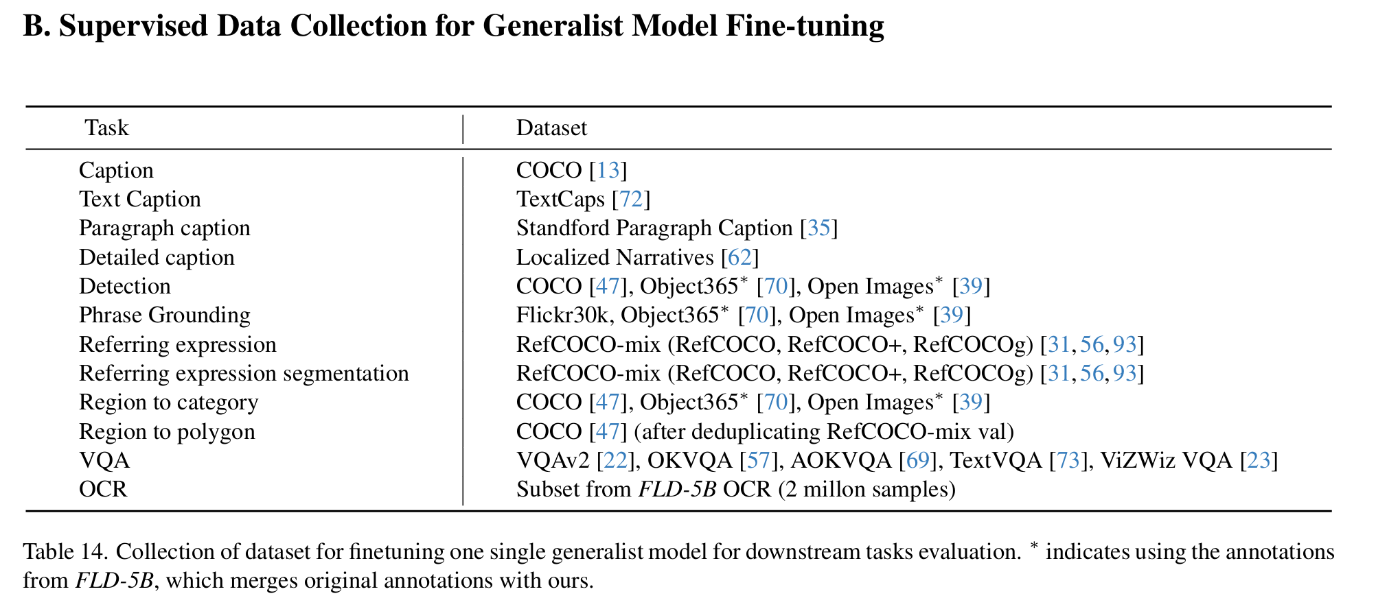
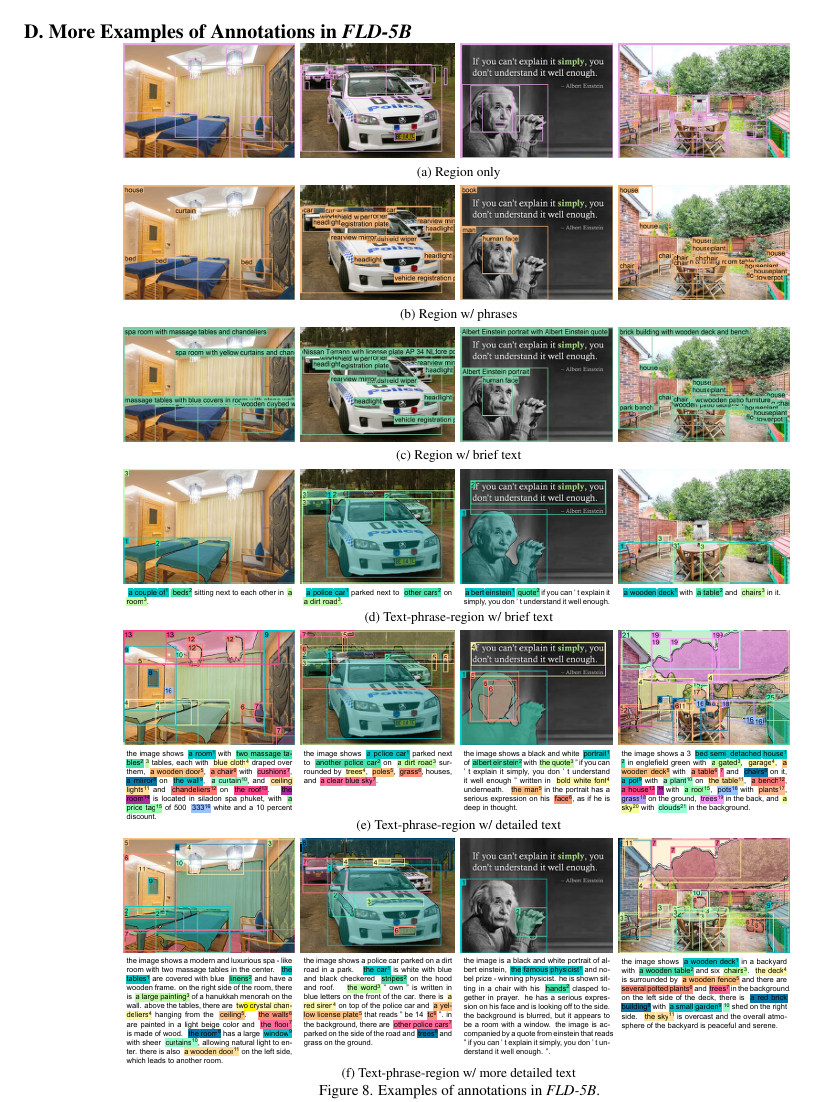
Florence-2 is pretrained on FLD-5B and then fine-tuned across downstream datasets. The paper describes one generalist model covering image-, region-, and pixel-level tasks. Its examples lean toward concrete objects and localized outputs.
Phi-3.5 Vision’s curriculum includes image–text pairs, OCR, charts, tables, document understanding, natural-image reasoning, PowerPoint comprehension, multi-image comparison, video summarization, and safety tuning. That breadth explains why it is the more natural choice when the answer itself needs to be a useful stretch of prose.
Choose by output contract #
The cleanest distinction is not the acronym printed on the model card. Ask what the caller needs back.
- If the output is an explanation, comparison, or document answer, begin with a VLM such as Phi-3.5 Vision.
- If the output is a box, mask, region, or compact task token, begin with a VFM such as Florence-2.
- If the output is a caption, test both against your data and latency budget.
This comparison is really a comparison of two concrete models, not a universal law. That is a feature. Architecture discussions improve quickly once the abstractions have to survive an actual workload.